The Evolution of blueEnergy Nicaragua (2002–2025)
21 years of
history and impact
Two decades transforming lives on the Caribbean Coast through energy, water, agroecology, and local leadership.
The Origins
Why Nicaragua? Why Bluefields?
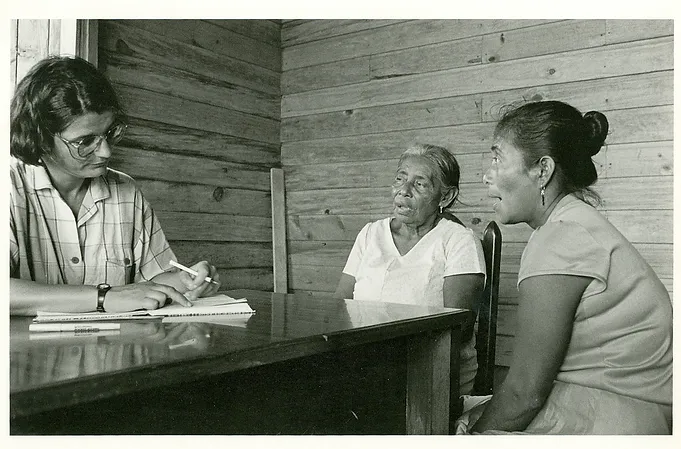
The foundations of blueEnergy trace back to 1985, with French linguist Dr. Colette Grinevald Craig — mother of blueEnergy co-founders Mathias and Guillaume Craig.
A professor of linguistics at the University of Oregon and President of the Council for Human Rights in Latin America, she received an official request from the Sandinista government to collaborate on the revitalisation of the Rama language. This took place in the context of peace negotiations to end the Contra War and discussions on the autonomy of indigenous peoples of the Atlantic Coast.
The Rama people — settled on Rama Cay island, in Bluefields Bay, and in continental communities to the south — needed to demonstrate that they possessed a distinct language in order to be officially recognised as an ethnic group and to claim their territorial rights.
Work began in collaboration with CIDCA (Centre for Atlantic Coast Documentation) in Bluefields, with support from the National Science Foundation to develop a grammar of the Rama language.
Why Nicaragua? Why Bluefields?
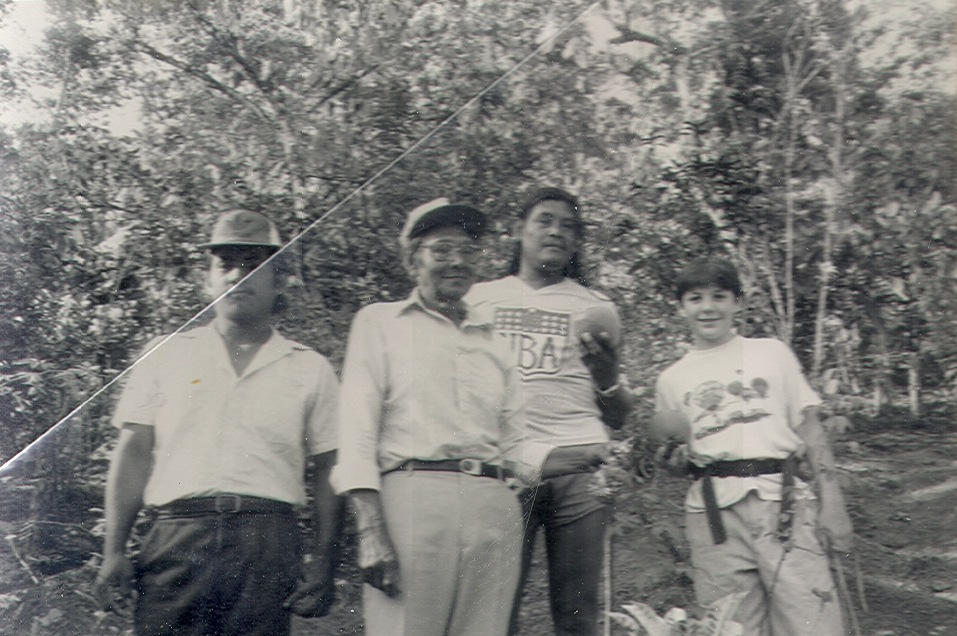
In 1989, Guillaume Craig accompanied his mother Colette to Bluefields at the age of 13 — at his own request, saying: 'I want to see where you disappear to.' That winter came just months after Hurricane Joan had devastated much of the city.
"I want to see where you disappear to." — Guillaume Craig, 13, to his mother before travelling to Bluefields for the first time.
In 1991, his brother Mathias Craig made the same journey, also aged 13. On Sundays he would visit Rama Cay and sit on a bench at the windy northern tip of the island, beside the church. It was there that the idea of installing wind energy was born — and with it, the original name: blueEnergy.
Timeline
The evolution of an organisation
From the first artisanal wind turbines to consolidated local leadership, each era reflects blueEnergy's commitment to the Caribbean Coast communities.
The Birth of blueEnergy
First steps on the Caribbean Coast
Mathias Craig, freshly graduated in environmental engineering, won a social entrepreneurship competition at MIT. Inspired by his childhood in Bluefields, he developed a rural electrification project to address the critical lack of energy access on the Caribbean Coast.
International Recognition and Innovation
Artisanal turbines, solar, and WaSH
Between 2004 and 2007, 9 energy systems were installed across 6 communities, benefiting ~1,500 people. First artisanal Piggott-type wind turbines were developed using local materials. Facing technical limitations, blueEnergy evolved toward solar systems and launched its Water, Sanitation, and Hygiene (WaSH) program.
International Recognition 2007–2008
CNN Heroes · Larry King Live · Tech Awards · Energy Globe Awards · Ashoka Fellowship
Agroecology and Territorial Resilience
Permaculture, climate change, and COP21
In 2014, the Food Security and Agroecology program was born, focused on permaculture, climate change adaptation, climate justice, and territorial resilience. blueEnergy participated in COP21 and launched community initiatives for biodigesters and recovery of ancestral practices.
Consolidated Local Leadership
Transition to Nicaraguan management
In 2018, blueEnergy underwent a key restructuring process. The office became fully led by local professionals. Sandra Pavón took over as Country Director and Margarita Ruiz as Deputy Director, consolidating a founding goal: sustainable local leadership.
2018 Restructuring – 100% Local Leadership
Sandra Pavón (Country Director) and Margarita Ruiz (Deputy Director) assume institutional leadership.
Consolidation and Inclusion
Biointensive, Rama electrification, and entrepreneurship
blueEnergy deepened its inclusive approach: collaboration with the committee for elderly people and people with disabilities, launch of the sustainable entrepreneurship program, and progress in electrification of the Rama Maneland community.
21 Years — Inclusive and Sustainable Focus
People with disabilities, the elderly, indigenous communities, and schools as impact pillars 2022–2025.
Two decades sowing change on the Caribbean Coast
blueEnergy Nicaragua continues to build more resilient, inclusive, and autonomous communities. Each project, each person trained, each family with access to energy or clean water is part of a story that is just continuing.